Bánh Mì Recipe: Classic Sandwich, Bread & Fillings
How to Make Bánh Mì: Bread, Pickles & Classic Fillings
A practical guide to the crackly Vietnamese baguette and the bright, savoury fillings that turn it into one of the world’s great sandwiches.
Classic cold-cut bánh mì (bánh mì đặc biệt)
Four Vietnamese-style baguette sandwiches with ready-to-eat cold cuts, pâté, mayonnaise, carrot and daikon pickles, cucumber and coriander. This recipe has not yet been kitchen-tested by Bánh Mì Hub.
Calories and protein depend on your roll, fillings and spread quantities. Use our bánh mì calories and protein guide to compare published sandwich values and estimate your own portions from ingredient labels.
Start here for the complete sandwich. The optional bread recipe below makes six rolls; this sandwich recipe uses four. Homemade bread and pickles require extra preparation before assembly.
Ingredients for 4 sandwiches
- 4 small Vietnamese baguette rolls or mini baguettes
- 4–8 tbsp ready-to-eat pork or chicken-liver pâté
- 4 tbsp shop-bought mayonnaise
- 160 g ready-to-eat chả lụa (Vietnamese pork sausage), sliced
- 120 g ready-to-eat giò thủ (head cheese) or cooked ham, sliced
- 120 g fully cooked roast pork, char siu or another ready-to-eat Vietnamese cold cut, sliced
- 8 tbsp drained carrot and daikon pickles (đồ chua), or to taste
- 12–16 cucumber batons
- 4 small handfuls fresh coriander (cilantro)
- Fresh chilli, thinly sliced, optional
- Light soy or Maggi-style seasoning sauce, a few drops per sandwich
- Freshly ground black pepper, to taste
- 4 tbsp pork floss, optional
Use shop-bought đồ chua or prepare the carrot and daikon pickles below before assembling.
Method
- Prepare the components. Check that the meats and pâté are ready to eat and follow their package instructions. Keep them chilled while you drain the prepared pickles and wash and dry the cucumber, coriander and chilli.
- Warm the rolls. Warm the four rolls in a 180°C / 350°F oven until the crust is crisp. Start checking after 3 minutes; the warming time depends on the bread.
- Split and spread. Slice each roll along one side, leaving a hinge. Spread 1–2 tbsp pâté on one cut face and 1 tbsp mayonnaise on the other.
- Add the cold cuts. Divide the sausage, head cheese or ham, and cooked roast pork equally between the four rolls. Fold the slices loosely rather than pressing them into a dense stack.
- Add the vegetables and seasoning. Add about 2 tbsp drained pickles, 3–4 cucumber batons and a small handful of coriander to each roll. Add chilli if wanted, a few drops of seasoning sauce and black pepper. Add 1 tbsp pork floss per roll if using.
- Serve. Serve the sandwiches immediately. Keep unused perishable fillings refrigerated according to their package instructions.

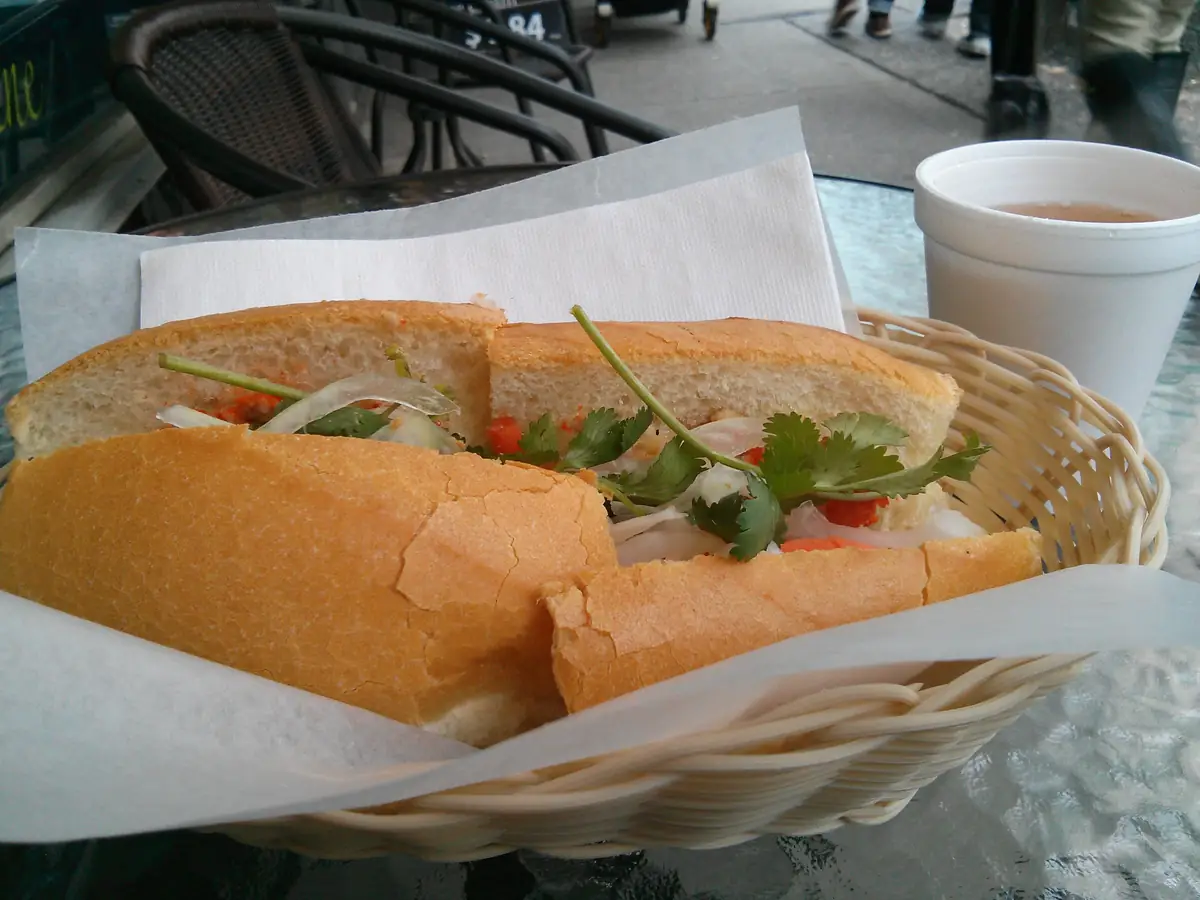
The best bánh mì is a study in contrasts. Its loaf should crack when you squeeze it but feel almost weightless in the hand. Inside, something rich—pâté, grilled pork, chicken, egg or tofu—is balanced by crisp cucumber, fragrant coriander, fresh chilli and sweet-sour carrot and daikon. No single filling owns the name. In Vietnamese, bánh mì can mean bread, while the sandwich is a flexible format shaped by region, vendor and appetite.
This guide brings together a classic cold-cut sandwich formula, an optional bread formula and other filling ideas. Start with the bread if you enjoy baking, or use the buying guide to choose a good substitute. Make the universal supporting cast once, then pick the filling that suits your table. The quantities are written for normal home kitchens and the flavours can be adjusted without losing the character of the sandwich.
What makes a bánh mì taste like bánh mì?
1. A thin, brittle crust
The crust should shatter into flakes rather than fight back like a thick artisan sourdough. A hot, steamy oven creates gloss and lift; drying the rolls at the end keeps them crisp.
2. A light, open crumb
The interior needs enough structure to hold sauce, yet it should compress easily around the filling. Good fermentation, gentle shaping and a fully preheated oven matter more than exotic flour.
3. Richness and acidity
Mayonnaise and pâté bring fat and depth. Pickled carrot and daikon cut through it. The sandwich feels generous without becoming heavy because every rich element has a fresh counterpoint.
4. Freshness at the finish
Cucumber, coriander and chilli go in at the last moment. They provide aroma, crunch and heat that cannot be replaced by adding more sauce.
The bread used for bánh mì
Choosing the bread? Our bánh mì bread recipe and buying guide explains published baking options, flour, shaping and proofing, suitable rolls and substitutes.
Vietnamese baguettes descend from French-style bread but developed a personality of their own: shorter, airier and generally more delicate. A useful bánh mì loaf is roughly 18–22 cm (7–9 in) long, with tapered ends, a central score and a very thin crust. It opens cleanly along one side and leaves a hinge to cradle the filling.
Rice flour is not the secret to an airy roll. Cookbook author Andrea Nguyen reports that her rice-flour-heavy baking trials produced hard, dense bread; small amounts may be used for other reasons. Her bread research also discusses commercial flour and dough conditioners. The untested home formula below uses wheat flour only, so there is one clear starting version to test.

Vietnamese-style baguette rolls
Ingredients
- 500 g strong white bread flour
- 340–355 g lukewarm water (weigh for accuracy)
- 7 g instant yeast (2¼ tsp)
- 20 g sugar (1½ tbsp)
- 10 g fine salt (weigh; volume varies by salt)
- 15 g neutral oil (1 tbsp), plus a little for the bowl
Use a kitchen scale for the bread ingredients. Begin with 340 g water. Add the rest only if the flour can absorb it; the dough should be soft and tacky, not soupy. Rising times depend on room temperature and flour. This bread formula still needs a measured baking test.
Method
- Mix. Stir flour, yeast and sugar together. Add water and oil; mix until no dry flour remains. Rest for 15 minutes, then add the salt.
- Develop the dough. Knead for 8–10 minutes by mixer, or use repeated stretch-and-folds for 12–15 minutes, until elastic and smooth enough to stretch thin without tearing immediately.
- First rise. Cover and leave in a lightly oiled bowl for 60–75 minutes, until roughly doubled. A warm room speeds this up; watch the dough rather than the clock.
- Divide and pre-shape. Turn onto a lightly floured surface, divide into six equal pieces and shape each into a loose cylinder. Cover and rest for 15 minutes so the gluten relaxes.
- Shape. Pat each piece into a rectangle, roll it tightly from the long edge, seal the seam and taper the ends. Place seam-side down on baking paper, leaving room between rolls.
- Final proof. Cover loosely and rise for 35–50 minutes. The rolls should look puffy and spring back slowly when pressed with a floured finger.
- Heat the oven. Preheat to 230°C / 450°F for at least 30 minutes. If your oven manufacturer permits this steam method, put a sturdy metal pan on a lower rack beneath the bread. Do not use a glass pan or put it directly on the oven floor.
- Score and steam. Mist the rolls with water and make one swift lengthwise slash. If using the approved steam-pan method, load the bread and carefully add a cup of boiling water to the metal pan with oven gloves on, keeping your face and hands away from steam and water away from the oven glass. Close the door immediately.
- Bake. Bake for about 18–22 minutes in total, checking for a golden crust; this timing needs a test in your oven. Only remove a steam pan if it can be handled safely, and never carry an overfilled pan of boiling water. Cool the rolls on a rack before splitting.
If you are buying the bread
Look first at a Vietnamese bakery. Failing that, choose a small French roll or mini baguette with a thin crust and a soft, open middle. Avoid a dense ciabatta or a heavily chewy sourdough: both can push the filling out with every bite. Refresh day-old rolls at 180°C / 350°F for 4–6 minutes, then let them stand for two minutes before cutting.
| Problem | Likely cause | Try next time |
|---|---|---|
| Dense, tight crumb | Under-proofed dough or too much flour | Use the dough test, allow a fuller rise and keep the dough soft |
| Thick, hard crust | Low heat or baking too long | Preheat fully, add steam early and remove rolls as soon as they are golden |
| Pale rolls | Oven not hot enough | Preheat for 30 minutes and check oven temperature if possible |
| Score does not open | Dull blade, shallow cut or over-proofing | Use a sharp blade at a slight angle and bake while dough still has spring |
| Rolls collapse | Over-proofed or handled roughly | Shorten final proof and score with one confident movement |
The essential pickles, spreads and fresh garnishes
Choosing a spread or seasoning? Our bánh mì sauces and spreads guide explains mayonnaise, pâté, Maggi-style seasoning, chilli and vegan ingredient checks.
Once the bread is sorted, these are the parts that make different fillings feel like members of the same family. Prepare the pickles first. Allow time for them to marinate before assembly; the marinating times below are estimates.
Quick carrot and daikon pickles — đồ chua
Ingredients
- 200 g carrot, cut into fine matchsticks
- 200 g daikon radish, cut into fine matchsticks
- 1 tsp fine salt
- 2 tbsp sugar, divided
- 120 ml rice vinegar (½ cup)
- 120 ml warm water (½ cup)
Method
- Toss carrot and daikon with the salt and 1 tbsp sugar. Massage for two minutes and rest for ten.
- Rinse briefly and squeeze gently so the vegetables remain crisp.
- Dissolve the remaining sugar in the warm water, stir in the vinegar and pour over the vegetables in a clean jar.
- Refrigerate once the mixture has cooled and marinate for at least 30 minutes; one to four hours is an estimated flavour guide. These are refrigerator pickles, not a shelf-stable canning recipe. Make a small batch for your planned meal; a two-week storage life has not been verified for this formula.
Vietnamese-style mayonnaise
For homemade mayonnaise, use 2 pasteurised egg yolks. Whisk with 1 tbsp lime juice and a pinch of salt. Add 180 ml (¾ cup) neutral oil a few drops at a time, then in a thin stream, until thick. For an easier option, loosen good shop-bought mayonnaise with a squeeze of lime. Keep cold. The FDA recommends pasteurised eggs or egg products for dishes served with raw or undercooked egg.
Pâté and seasoning sauce
Use a smooth, ready-to-eat pork or chicken-liver pâté. Keep it refrigerated according to its label and take out only what you need for assembly. A small amount is enough. Maggi-style seasoning is common, though light soy sauce also works. Add it by the drop: it should deepen the filling, not soak the loaf.
The fresh layer
Plan on 3–4 cucumber batons, a small handful of coriander (cilantro) and thinly sliced fresh chilli for each sandwich. Spring onion is a good extra. Keep these dry and chilled so they stay crisp.
Optional finishing touches
Freshly ground black pepper, pork floss, a few drops of fish sauce, fried shallots or a light swipe of chilli sauce can finish a bánh mì. Choose one or two; too many extras hide the main filling.
How to assemble bánh mì without making it soggy
- Warm the roll. Give it 3–5 minutes in a 180°C / 350°F oven. The crust should become crisp, not dark.
- Cut a hinge. Slice along one side without cutting all the way through. Pull out only a little crumb if the loaf is unusually dense.
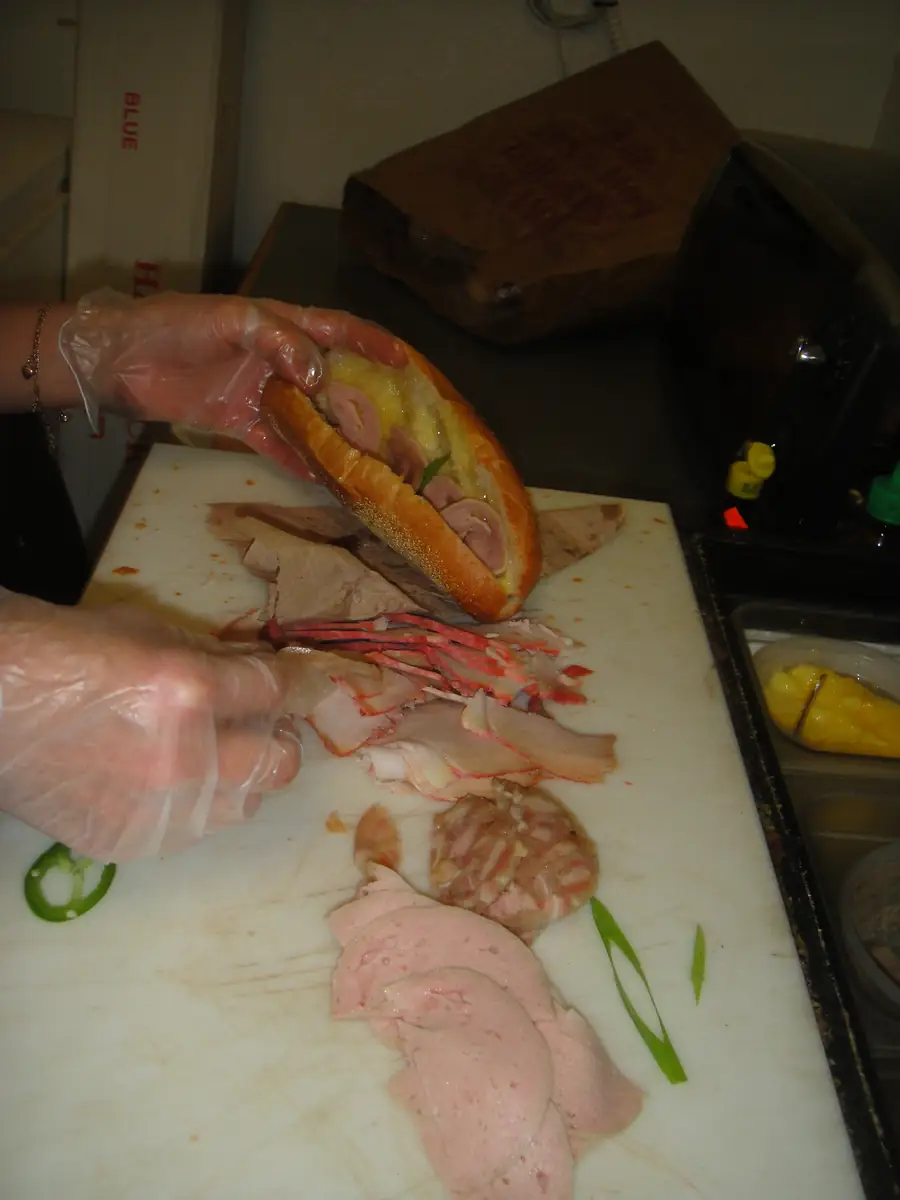
- Protect the bread. Spread pâté on one side and mayonnaise on the other. The fat creates a barrier against wetter fillings.
- Add the main filling. Keep hot fillings hot and drain excess sauce before spooning them in.
- Build the fresh layer. Add well-drained pickles, cucumber, coriander and chilli. Finish with a few drops of seasoning sauce and black pepper.
- Serve immediately. Bánh mì is at its best while the bread crackles and the vegetables are still cool.
Six of the most popular bánh mì fillings
Each formula below makes four generous sandwiches unless stated otherwise. Have four rolls, mayonnaise, drained đồ chua, cucumber, coriander, chilli and seasoning sauce ready before you begin.
1Bánh mì đặc biệt — the special combination
The deli-counter classic combines several pork textures in one loaf. Names and exact contents vary by shop; you may also see thập cẩm, meaning mixed or assorted.
For each sandwich
- 1–2 tbsp smooth pork or chicken-liver pâté
- 1 tbsp mayonnaise
- 40 g chả lụa (Vietnamese pork sausage), sliced
- 30 g giò thủ (head cheese) or cooked ham, sliced
- 30 g roast pork, char siu or other Vietnamese cold cut
- 1 tbsp pork floss, optional
- Pickles, cucumber, coriander, chilli and seasoning sauce
How to build it
Spread pâté and mayonnaise over the warm roll. Fold the cold cuts loosely rather than stacking them flat; the pockets make the sandwich feel lighter. Add pickles and cucumber, then tuck herbs and chilli along the top. Finish with black pepper and only a few drops of seasoning sauce.
2Bánh mì thịt nướng — lemongrass grilled pork
Ingredients
- 450 g (1 lb) pork shoulder, thinly sliced
- 2 tbsp finely chopped lemongrass
- 2 garlic cloves, grated
- 1 small shallot, grated
- 1½ tbsp fish sauce
- 1 tbsp light soy sauce
- 1½ tbsp sugar or honey
- 1 tbsp neutral oil
- ½ tsp black pepper
Method
Mix everything and marinate in the refrigerator for at least one hour, or overnight. Thread onto skewers or spread in a single layer. Grill or cook in a very hot pan, using 2–3 minutes per side only as an estimate. Check that the pork reaches at least 63°C / 145°F with a food thermometer and rest for at least three minutes before dividing among the rolls. The browned edges are the point, so cook in batches rather than crowding the pan.
3Bánh mì xíu mại — pork meatballs in tomato sauce
Ingredients
- 500 g (1.1 lb) minced pork
- 1 shallot and 2 garlic cloves, finely chopped
- 1 tbsp fish sauce
- 1 tsp sugar
- ½ tsp black pepper
- 1 tbsp cornflour (cornstarch)
- 1 tbsp neutral oil
- 400 g (14 oz) chopped tomatoes
- 120 ml (½ cup) water or light stock
Method
Mix pork with half the shallot and garlic, fish sauce, sugar, pepper and cornflour. Roll into 16 small balls. Soften the remaining aromatics in oil, add tomatoes and water, then simmer for ten minutes. Add the meatballs, cover and simmer gently, using 12–15 minutes as an estimate. Check that their centres reach at least 71°C / 160°F with a food thermometer. Spoon four meatballs into each roll with just enough sauce to moisten the bread.
4Bánh mì gà nướng — grilled lemongrass chicken
Ingredients
- 500 g (1.1 lb) boneless chicken thighs
- 2 tbsp finely chopped lemongrass
- 2 garlic cloves, grated
- 1 tbsp fish sauce
- 1 tbsp light soy sauce
- 1 tbsp brown sugar
- 1 tbsp neutral oil
- ½ tsp black pepper
Method
Marinate in the refrigerator for at least 30 minutes and up to overnight. Grill, barbecue or pan-sear over medium-high heat. Treat 5–7 minutes per side as an estimate and check that the thickest part reaches at least 74°C / 165°F with a food thermometer. Rest for five minutes and slice across the grain. The juicy thigh meat stands up well to the acidity of the pickles.
5Bánh mì trứng — fried egg
This is the fast, satisfying breakfast version. Fry two eggs per sandwich in a little neutral oil until the whites and yolks are firm, following FDA guidance. For a soft-yolk variation, use pasteurised eggs. Spread the roll with mayonnaise and, if desired, a very thin layer of pâté. Add eggs, cucumber, pickles, coriander, chilli, black pepper and a few drops of soy or Maggi-style seasoning. Serve immediately.
6Bánh mì chay — lemongrass tofu
Ingredients
- 400 g (14 oz) extra-firm tofu, pressed and sliced
- 1½ tbsp light soy sauce
- 1 tbsp finely chopped lemongrass
- 1 garlic clove, grated
- 2 tsp maple syrup or sugar
- 1 tsp sesame oil
- 1 tbsp neutral oil for cooking
- Vegan mayonnaise; mushroom pâté, optional
Method
Mix the soy, lemongrass, garlic, sweetener and sesame oil. Marinate tofu for 20–30 minutes. Pat lightly dry and pan-fry in neutral oil until golden on both sides. Layer into the bread with vegan mayonnaise or mushroom pâté, then be generous with pickles, cucumber, herbs and chilli. Add sautéed mushrooms when you want a deeper savoury note. For a vegan sandwich, also check the bread and every sauce; omit fish sauce, meat pâté and pork floss.
| Style | Main character | Best extra | Good for |
|---|---|---|---|
| Đặc biệt | Rich, savoury, layered | Fresh chilli and black pepper | The full deli experience |
| Thịt nướng | Smoky, caramelised | Extra cucumber | Barbecues and gatherings |
| Xíu mại | Soft, juicy, comforting | A little tomato sauce | A hearty lunch |
| Gà nướng | Fragrant and accessible | Lime in the mayonnaise | A crowd-friendly option |
| Trứng | Fast and satisfying | Crisp-edged eggs | Breakfast |
| Chay | Fresh and savoury | Mushroom pâté | Plant-based meals |
A calm make-ahead plan
Before you start
- Make the carrot and daikon pickles.
- Mix or buy the pâté and mayonnaise.
- Shop for herbs, cucumber and chillies.
- Marinate pork or chicken overnight.
On the day
- Bake the rolls, or refresh bought ones shortly before serving.
- Cook the main filling and keep it safely hot.
- Drain pickles and prepare fresh garnishes.
- Set up an assembly line and fill only when people are ready to eat.
If you are serving a group, put warm rolls in a basket and arrange fillings in separate bowls. Guests can build their own, which keeps the bread crisp and makes dietary choices easier. Keep perishable fillings chilled at 4°C / 40°F or below and follow their labels. USDA guidance limits time at room temperature to two hours, or one hour above 32°C / 90°F. Reheat cooked leftovers to 74°C / 165°F. See the USDA food-handling guide and cooking-temperature guidance.
How to adjust the flavour without losing the balance
Taste the complete sandwich before changing any single component. If it feels heavy, the answer is usually more pickle, cucumber or herbs rather than less filling. If it tastes sharp, add a little more mayonnaise or a pinch of sugar to the pickle liquid. If it seems flat, try seasoning sauce, black pepper or fresh chilli before reaching for salt. A bánh mì should be boldly seasoned, but every bite still needs to taste fresh.
Coriander is traditional and distinctive, though mint, Thai basil or extra spring onion can help diners who dislike it. For gentler heat, remove the chilli seeds or serve sliced chilli on the side. Gluten-free diners will need a suitable roll and must also check soy sauce, seasoning sauce, pâté and processed meats individually.
Bánh mì recipe FAQs
What is the best bread for bánh mì?
A short, light baguette with a thin crackly crust and airy crumb. Vietnamese bakery rolls are ideal. A small French roll is the most practical substitute; warm it briefly before filling.
Is bánh mì bread made with rice flour?
Rice flour is not a requirement. Andrea Nguyen’s baking research challenges the idea that rice flour creates the familiar airy texture. The bread formula on this page uses wheat flour only; it has not yet been kitchen-tested by Bánh Mì Hub.
Can I make the sandwiches in advance?
Prepare the components ahead, but assemble as close to serving as possible. A fully assembled bánh mì softens quickly because the bread absorbs moisture from sauce, pickles and hot fillings.
What is the classic filling?
There is no single universal filling. A popular “special” combines pâté, mayonnaise and several Vietnamese cold cuts, while grilled pork, meatballs, chicken, eggs and vegetarian fillings are also well established.
How do you pronounce bánh mì?
The Oxford dictionary entry provides English audio and the pronunciation /ˌbɑːn ˈmiː/, approximately “bahn MEE”. Vietnamese pronunciation includes tones, so this English guide is only an approximation. The unaccented spelling “banh mi” is also common in English.
Can I freeze the rolls?
Yes. Freeze fully cooled rolls in an airtight bag for up to one month. Thaw, mist very lightly with water and refresh at 180°C / 350°F for 5–8 minutes.
Recipe notes and further reading: This home guide draws on common Vietnamese sandwich practice and the combination described in the Vietnam Tourism recipe collection. For regional context, see Vietnam Tourism’s guide to bánh mì in Vietnam. These references describe sandwich ingredients and regional context; they do not establish that Bánh Mì Hub has tested these exact quantities. The formulas and timings still need a kitchen test. Bread context: Andrea Nguyen’s bread research. Steam technique: King Arthur Baking’s steam guide. Reviewed by the Bánh Mì Hub Editorial Team, 13 October 2026.