Vietnamese baguettes · baking · buying
Find the right bread for your bánh mì
Looking for a banh mi bread recipe? Start with a published method from a baker who explains the dough and shows the result. This guide helps you choose that recipe, understand the main stages and find suitable bread when you would rather buy it.
By the Bánh Mì Hub Editorial Team · Sources reviewed 20 October 2026
What kind of bread is used for bánh mì?
The usual starting point is a baguette-style roll with a crisp, relatively thin crust and a light interior that holds the filling. A comfortable bite matters: an aggressively hard crust can make the sandwich difficult to eat.
There is room for variation. In her bread-buying guide, Vietnamese cookbook author Andrea Nguyen discusses both small rolls and sections of longer loaves. Her advice is to judge texture and how the bread works with the sandwich, rather than insist on one shape or label.
Think of your decision in two parts: do you want a bread-baking project, or do you want to assemble a sandwich? Both are sensible routes. Our bánh mì sandwich guide covers the fillings and assembly once you have the bread.
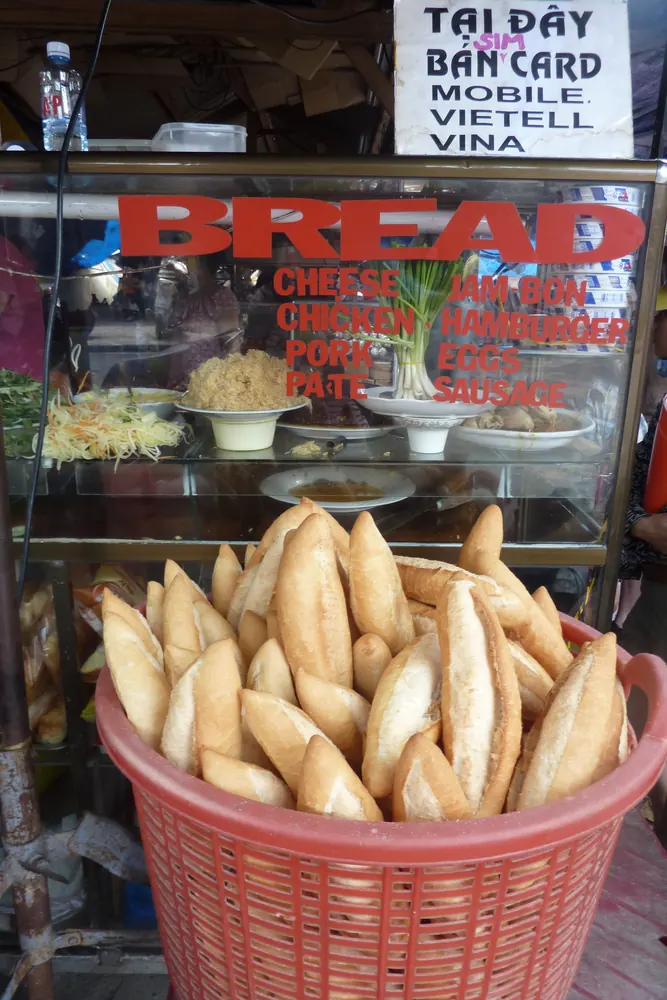
Banh mi bread recipes: choose a method to follow
These are three useful starting points, selected for different reading and learning preferences. Follow the chosen creator’s full quantities, sequence and equipment notes together.
Watch a Vietnamese baguette demonstration
Helen Le · Helen’s Recipes
Helen’s published Vietnamese baguette video is an option for readers who prefer a visual demonstration. Open the original video and its description for the recipe information.
Watch Helen’s bánh mì bread recipe
Free video · Published by Helen’s Recipes
Follow a written, illustrated recipe
Tracy · Served From Scratch
This version uses all-purpose flour and milk, with a food-processor method and notes about other mixing options. The author describes a softer, chewy baguette and provides process photographs.
Read Tracy’s Vietnamese baguette recipe
Free written recipe · Contains dairy as written
Use a specialist bánh mì cookbook
Andrea Nguyen · The Banh Mi Handbook
Nguyen documents her roll-development work on Viet World Kitchen and publishes the recipe in her specialist sandwich book. Consider a library copy or the book if you want the wider bread-and-fillings context.
See the book and author details
Cookbook route · Full formula is in the book
Flour, yeast and the rice-flour question
Does bánh mì bread need rice flour?
No: rice flour is not a requirement for Vietnamese-style baguettes. Nguyen’s account of her bread trials describes dense results from rice-flour-heavy formulas and explains the importance of flour and commercial dough conditioners in some bakery breads. Her findings challenge the idea that a large rice-flour addition is the universal secret to a light roll.
That does not establish one ingredient list for every bakery. It means you should not add rice flour to an established wheat-bread recipe simply because another page calls it essential. Nor does a small rice-flour addition turn wheat bread into a gluten-free product.
Follow the flour and yeast specified in your recipe
All-purpose flour and bread flour are not interchangeable labels for every baking project. Start with the flour the author used, and read any substitution notes before changing it. If you change the flour, the outcome becomes a variation rather than a direct reproduction of that recipe.
King Arthur’s guide to baking with yeast explains the differences between yeast types. Match the type and handling instructions in your chosen method instead of assuming that every packet can be used in exactly the same way.
Recipes also differ in whether they include milk, egg, fat, sugar or improvers. Check the actual formula for dietary requirements. The milk-containing recipe above, for example, should not be treated as a dairy-free recipe without a separate, supported adaptation.
Understand the bread-making stages before you start
The following is a guide to reading a recipe, not a replacement formula. Exact weights, temperatures, dough sizes and timings should come from the complete method you selected.
1. Measure and prepare the equipment
A scale helps you reproduce ingredient weights. Have the mixing bowl, scraper, baking surface and cooling rack ready, and check whether the method needs a mixer or food processor. Andrew Janjigian’s baguette tools guide explains specialist equipment; use the recipe’s requirements to decide what you need rather than buying every tool first.
2. Mix and allow the dough to rise
Pay attention to the author’s dough description and rise target as well as the clock. King Arthur’s proofing guide explains why appearance and physical checks are useful. Note what the dough looks like before the rise so you have something to compare with afterwards.
3. Divide, rest and shape
Martin Philip’s shaping guide separates dividing, preshaping, resting and final shaping. Equal dough weights help make consistent loaves. If a piece resists stretching, his advice is to give it more relaxation time rather than force it. Use your recipe’s roll size; a long French baguette and a small sandwich roll are different targets.
4. Judge the final proof
This is the rise after shaping. Use the recipe’s cues, supported by the general proofing guidance above. Do not keep waiting solely because a timer has not finished, or assume that a warm kitchen and a cool one will behave alike. A photograph just after shaping is a helpful reference for visible expansion.
5. Score and bake using the specified setup
Scoring creates an opening that helps direct expansion. Philip’s scoring experiments show that the cut and tool can affect the result. Follow the selected recipe’s scoring pattern rather than combining instructions from several formulas.
Jennifer Latham’s steam-baking guide explains how moisture keeps the surface flexible early in baking and why a drier finish matters. Choose a steam setup permitted by your oven and bakeware manufacturers. Do not pour water onto oven glass or improvise a hot-glass steam vessel.
6. Cool before judging the crumb
Let the bread cool as directed before cutting it. Then look at the interior as well as the outside. For sandwich planning, consider how the roll holds spreads, pickles and filling; a photograph of an attractive crust alone does not tell you how it eats.
Troubleshooting: where to look when a batch disappoints
A single symptom is not a certain diagnosis. Use this checklist with the original recipe’s photographs and notes. Record what happened before changing one variable; these are investigation prompts, not certain diagnoses.
| What you notice | What to review first |
|---|---|
| The dough fights shaping | Compare the resting stage with the shaping guide. Avoid forcing the dough to length. |
| Rolls are uneven sizes | Check divided weights and shaping consistency before changing ingredients. |
| The centre is dense | Compare flour, rise observations, dough handling and the cooled crumb with the creator’s example. |
| The cut barely opens or the bread tears elsewhere | Review proofing, scoring and loading together; a deeper cut is not automatically the answer. |
| The crust is too hard for a sandwich | Check the recipe’s intended texture and your oven setup. A different bread style may suit the sandwich better. |
| The inside looks gummy | Check when it was cut and whether the bake matched the original method before changing the water quantity. |
When asking the recipe author for help, include the flour brand, ingredient weights, yeast type, room conditions, rise observations, oven setting and a photograph of the cooled cross-section. That is more useful than the baking time alone.
Buying bánh mì bread and choosing substitutes
Buying bread is a practical option, including for experienced cooks. Huy Vu’s bánh mì recipe on Hungry Huy uses store-bought Vietnamese baguettes and discusses the difference their texture makes.
Ask a Vietnamese bakery or sandwich shop whether it sells plain rolls. Confirm the branch, batch times and availability before making a special trip. A shop selling sandwiches is not automatically a retail supplier of unfilled bread.
| Bread option | What to assess |
|---|---|
| Plain Vietnamese bakery roll | A natural place to begin. Check freshness, ingredients and whether unfilled rolls are sold. |
| Small baguette or part of a longer loaf | Choose a manageable portion and a crust you can bite through comfortably. |
| Bolillo-style roll | A substitute discussed by Nguyen. Check the individual bakery’s texture and size. |
| Ordinary soft sandwich roll | A convenient fallback with a different crust. Consider sweetness and how it handles the filling. |
| Dense sourdough or very hard artisan baguette | Assess the bite carefully; a bread that tastes good alone can overwhelm a filled sandwich. |
A useful buying check: buy one roll before placing a large order. Ask when it was baked, read the ingredient information and consider the crust, interior and portion size with your intended filling.
Find bakeries through our city guides
Start with the city guides or these existing bakery profiles: Nhu Lan in Footscray, Hong Ha in Mascot and Phuoc Thanh in Richmond. These links provide shop context; plain-roll sales have not been confirmed.
Keeping, freezing and refreshing the bread
Plan around when you want to eat it. King Arthur’s bread-storage tests describe a trade-off: airtight wrapping retains moisture in the interior but softens a crisp crust. Follow the bakery or recipe author’s storage advice for the particular bread.
For longer keeping, its freezing guide recommends cooling bread completely, wrapping it airtight and dividing it into useful portions. Freeze plain rolls separately from your sandwich fillings so you can thaw only what you need.
Refresh the crust using the author’s or baker’s instructions and watch the bread rather than apply one universal reheating time. Part-baked products need the pack’s finishing instructions. Warm or crisp the bread before adding the fresh vegetables and spreads.
Bánh mì bread questions
Is Vietnamese baguette bread always made with rice flour?
No. Nguyen’s published research describes wheat-based bakery bread and unsuccessful rice-flour-heavy experiments. Choose a complete recipe rather than adding rice flour as a supposed universal secret.
Can I use a French baguette for bánh mì?
Yes, it can be a practical substitute. Consider the individual loaf’s crust, portion size and how comfortably you can bite through the filled sandwich.
Is bánh mì bread vegan?
It depends on the recipe or bakery. Some versions include milk or egg. Ask for ingredient and processing-aid information where needed; the bread’s name and appearance do not establish its ingredients.
Is bánh mì bread gluten-free?
Ordinary wheat-based rolls are not. Use an appropriately labelled gluten-free product or a separately developed gluten-free recipe, and check the fillings and preparation conditions too.
Can I use a bread machine or an air fryer?
Choose a method developed for that appliance. The recipes and technique references here should not be treated as proof that the same dough and baking settings will work in every machine.
How much time should I allow for making the bread?
Read the complete recipe, including rises, shaping and cooling. Hands-on preparation time can be much shorter than the total elapsed time. Choose a method that fits your day before starting.
Ready to build your sandwich?
Continue with our bánh mì sandwich guide for fillings and assembly, or the sauces and spreads guide for mayonnaise, pâté and seasoning choices. Buying suitable bread lets you concentrate on those layers.
Sources and editorial approach
This guide brings together the credited creators’ published material and Bánh Mì Hub’s own selection checklists. We do not reproduce their full recipes or use their baking results as our own. General French-baguette references explain techniques; they are not a claim that every Vietnamese roll uses the same formula.
- Andrea Nguyen, Viet World Kitchen: bread buying and bread development; book details from the publisher.
- Original recipe resources: Helen’s Recipes and Served From Scratch.
- King Arthur Baking: yeast, equipment, shaping, proofing, scoring, steam, storage and freezing.
- Huy Vu, Hungry Huy: buying bread for homemade bánh mì.